


Micro LED Dispensing
Micro-volume underfill, black matrix bank dispensing and protective encapsulation for micro LED display assembly — engineered for chip pitches under 100 µm.
Micro-Volume Dispensing for Next-Generation Micro LED Displays
Micro LED is widely regarded as the successor display technology to OLED, offering self-emissive pixels with individual LED die measured in tens of micrometres, mounted directly onto a backplane at extraordinary density. Unlike conventional LED packaging, micro LED assembly has almost no tolerance for process variation: chip pitches below 100 µm mean that a dispensed dot only slightly out of position or over-volume can bridge to an adjacent pixel and cause an optical or electrical defect visible to the naked eye on the finished display.
Dispensing plays a supporting but critical role across the micro LED process flow — depositing black matrix or reflective bank material to optically isolate sub-pixels, underfilling beneath transferred die to protect fragile electrical connections, applying clear encapsulant to seal the emissive layer, and performing pixel-level repair dispensing on sites identified by automated optical inspection after mass transfer. Each of these steps operates at dispense volumes measured in nanoliters, with positioning accuracy that must hold to single-digit micrometres across substrates that can span an entire display panel.
SANCO desktop visual dispensing machines and jetting-valve platforms deliver the sub-nanoliter dose control, high-resolution CCD vision alignment and panel-scale motion accuracy required for micro LED bank dispensing, underfill and repair applications across R&D and early production volumes.
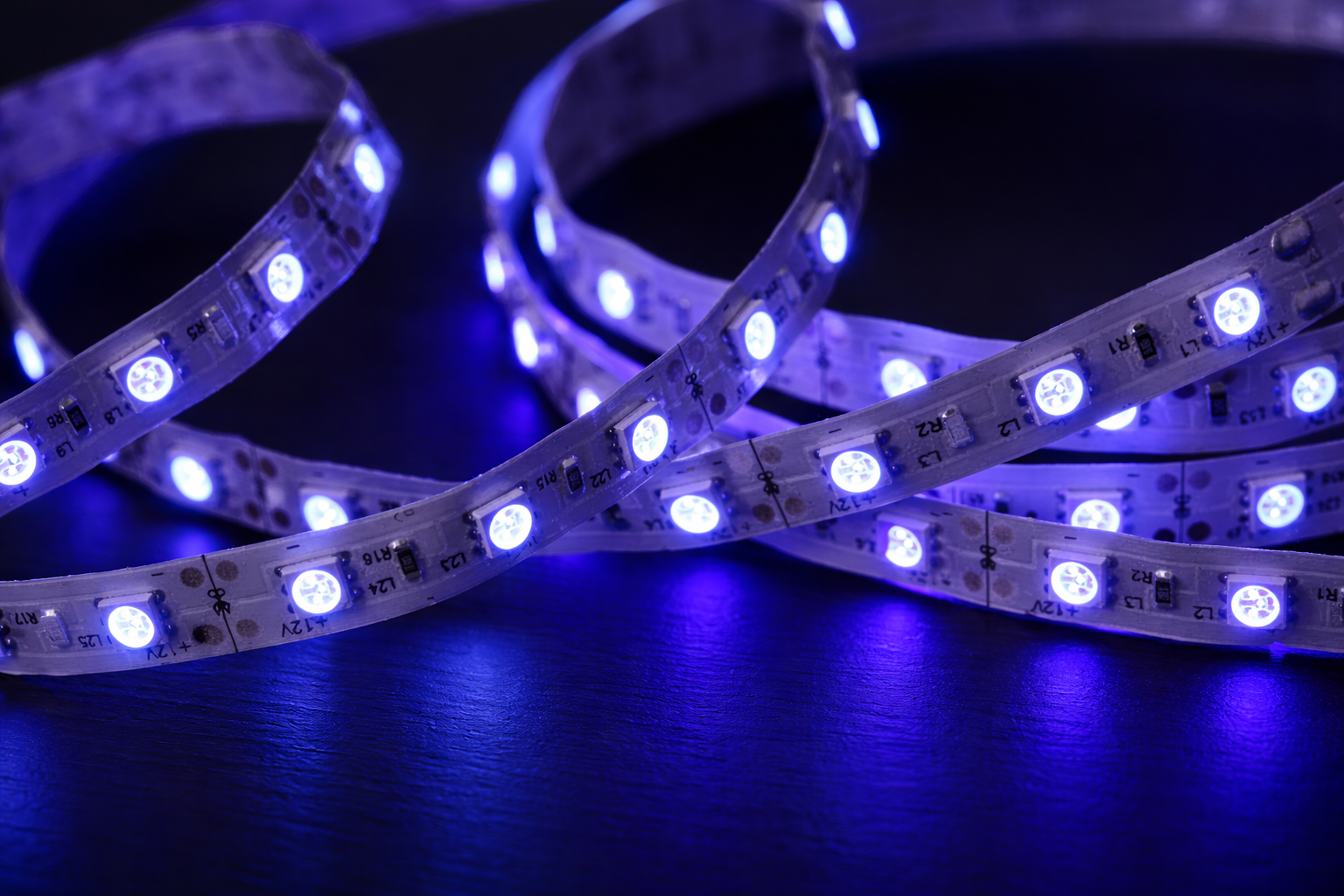
Why Micro LED Dispensing Pushes Precision Dispensing to Its Limits
Micro LED assembly operates at the smallest feature sizes and tightest tolerances of any current display or LED packaging process — every dispensing parameter must scale down accordingly.
Sub-100 µm Chip Pitch Accuracy
With chip pitches now regularly below 100 µm and trending smaller, dispensed dot placement must hold to within a few micrometres of the target pixel site. Any positional drift risks bridging adjacent sub-pixels or missing the intended die entirely.
Underfill Capillary Fill Beneath Micro-Scale Bumps
Micro LED die bumps are a fraction of the size used in conventional flip-chip packaging. Underfill must achieve complete capillary fill beneath these microscopic bond points using dispensed volumes in the low nanoliter range, without voids that would compromise electrical reliability.
Mass Transfer Defect Repair at Pixel Level
After mass transfer, a small percentage of pixel sites require repair — re-dispensing encapsulant or adhesive at a single defective pixel without disturbing the tens of thousands of functional pixels immediately surrounding it.
Black Matrix Bank Wall Precision
Bank or dam material dispensed between sub-pixels must form a continuous, uniform wall only tens of micrometres wide to optically isolate each pixel and contain subsequently dispensed fill material within its boundary.
Panel-Scale Uniformity Across Large Substrates
Display-class micro LED panels can exceed a meter in one dimension. Dispense volume, dot height and cure state must remain uniform across the full panel area despite motion-system travel distances far larger than the features being dispensed.
Thermal Budget Constraints for Color Stability
Micro LED die and phosphor conversion layers are sensitive to elevated temperature exposure, which can shift color point or degrade emissive layers. Cure processes for dispensed materials must stay within a tightly constrained thermal budget.
Key Capabilities for Micro LED Dispensing
Sub-Nanoliter Dispense Volume Control
Jetting and micro-needle dispensing technologies meter fluid volumes in the sub-nanoliter range, matching the scale of individual micro LED pixel sites.
CCD Vision ±0.01 mm Pixel-Level Alignment
High-resolution optical alignment references individual pixel fiducials, holding dispensing position accuracy tight enough for sub-100 µm pitch arrays.
Pick-and-Repair Compatible Dot Dispensing
Single-pixel-addressable dispensing allows targeted repair of defect sites identified by automated optical inspection, without affecting neighbouring functional pixels.
Non-Contact Jetting Valve Technology
Jetting dispensing eliminates needle contact with the delicate panel surface, reducing mechanical stress risk on fragile micro LED die and backplane structures.
Panel-Scale Motion Platform with Micron Repeatability
Precision linear motion stages maintain positioning repeatability at the micron level across full display-panel travel distances.
Low-Temperature Cure Compatible Materials Support
Dispensing platform is compatible with UV-cure and low-temperature thermal-cure material systems that protect color-sensitive micro LED and phosphor layers.
Programmable Bank / Dam Path Generation
Software-defined dispensing paths generate continuous bank or dam lines along pixel boundaries directly from display layout data.
Large-Substrate Motion Platform Integration
Gantry and motion-system configurations scale to Gen-class substrate sizes used in display-panel micro LED production.
The Micro LED Dispensing Process Step by Step
Micro LED dispensing must maintain pixel-level precision across every stage, from bank formation through final repair dispensing.
Panel Load & Fiducial Alignment
Backplane is loaded and CCD vision captures pixel-array fiducials to calculate sub-pixel dispensing offset across the panel.
Bank / Dam Dispensing
Continuous bank material is dispensed along pixel boundary lines to isolate sub-pixels and contain subsequent fill.
Underfill / Encapsulant Dot Dispensing
Nanoliter-scale material is jetted or needle-dispensed at each die site, achieving capillary fill without bridging.
Cure & Optical Inspection
UV or low-temperature cure locks dispensed material; automated optical inspection checks coverage and isolation across the panel.
Pixel-Level Repair Dispensing
Flagged defect sites are individually re-dispensed at single-pixel resolution to complete panel yield.
Micro LED Material Types & SANCO Compatibility
SANCO dispensing platforms handle the specialty low-volume materials used across the micro LED display assembly process.
| Material Type | Viscosity Range | Cure Method | Typical Application | SANCO Compatibility |
|---|---|---|---|---|
| Jetting-Grade UV Encapsulant | 1,000 – 8,000 mPa·s | UV 365–405 nm, 2–10 s | Sub-pixel encapsulation and protective sealing over transferred micro LED die | Recommended |
| Capillary Underfill | 500 – 5,000 mPa·s | Thermal 100–150°C or UV | Void-free fill beneath micro-scale flip-chip bumps on transferred die | Recommended |
| Black Matrix Bank Material | 3,000 – 15,000 mPa·s | UV or thermal cure | Optical isolation wall between adjacent sub-pixels | Recommended |
| Optically Clear Silicone | 2,000 – 10,000 mPa·s | Thermal 100–120°C | Low-stress protective coating compatible with color-sensitive emissive layers | Recommended |
| Repair-Grade UV Adhesive | 500 – 4,000 mPa·s | UV 365 nm, 1–5 s | Fast single-site dispensing for pixel-level defect repair after mass transfer | Recommended |
Frequently Asked Questions
What dispense volumes can SANCO machines achieve for micro LED applications?
SANCO jetting-valve and micro-needle dispensing configurations achieve dispense volumes down to the sub-nanoliter range, matching the scale required for individual micro LED pixel sites as small as tens of micrometres in pitch. Contact our application engineers to review volume requirements for your specific pixel pitch.
Can SANCO equipment perform single-pixel repair after mass transfer inspection?
Yes. SANCO dispensing machines support pixel-addressable dispensing coordinates, allowing targeted re-dispensing at individual defect sites flagged by automated optical inspection systems without disturbing surrounding functional pixels.
How does SANCO maintain alignment accuracy across large display-class panels?
High-resolution CCD vision references multiple fiducial points across the panel and applies localized position correction, compensating for substrate expansion, stage travel error and panel-level distortion to maintain micron-level accuracy over the full panel area.
Does SANCO support both needle and jetting dispensing for micro LED processes?
Yes. SANCO platforms are configurable with either micro-needle dispensing valves for contact dispensing or non-contact jetting valves, selected based on the fluid viscosity, target volume and contact-sensitivity requirements of the specific micro LED process step.
What cure methods are compatible with SANCO micro LED dispensing equipment?
SANCO dispensing machines support UV-cure and low-temperature thermal-cure material systems, both compatible with the constrained thermal budget required to protect color-sensitive micro LED die and phosphor conversion layers during processing.
Where can I learn about other LED and display dispensing applications?
Visit our Applications section for guides covering mini LED dispensing, COB encapsulation, LED lens bonding and LED strip potting. For equipment specifications, see our dispensing machine product pages.